Simple Face Oil Recipe: A Water-Free 20 g Trial
What is a simple face oil recipe?
A small face oil trial can combine 14 g jojoba oil with 6 g squalane: 20 g total, with no water or fragrance added. Weigh, mix and label it, then test the finished blend on a small skin area before facial use. This is an original, desk-researched formulation, not a tested product. Water-free does not establish a safe shelf life. Stop and wash off any skin reaction; consult a clinician for suspected allergy. Breathing or swallowing difficulty needs immediate medical attention.
The useful part of making a small batch is knowing exactly what went into it. You can record two ingredients and two weights without buying a shelf of extras. You also need to be comfortable with the limits: we have not performed stability, microbial or consumer testing on this blend. If you want a finished product with manufacturer-established directions and dating, choose one instead.
This guide covers an adult cosmetic facial-oil trial. It does not offer treatment for acne, eczema or other skin conditions, or a formula for children, lips or the eye area.
Which two ingredients are used?
For this version, the source specifications are Lotioncrafter's Clear Jojoba Oil and Olive Squalane. Check the current supplier documentation for the exact materials you buy.
| Ingredient | Formula by weight | Weight for this batch | Label identity to check |
|---|---|---|---|
| Clear jojoba oil | 70% | 14.0 g | Simmondsia chinensis (Jojoba) Seed Oil |
| Olive squalane | 30% | 6.0 g | Squalane |
| Total | 100% | 20.0 g | Two ingredients |
Lotioncrafter's jojoba page identifies jojoba as a liquid wax and lists a usage range of 1–25%, up to 100%. Its squalane page lists typical use at 2–31%, up to 100%, and includes facial serums among its applications. Those are ingredient-use specifications; they are not evidence that this particular finished blend suits everyone.
The 70:30 ratio is our simple starting formulation, not a published optimum or a comparison-test winner. Both the ratio and batch size are editorial choices. We chose round weights so that the recipe is easy to audit. There is no claim that adding a second ingredient improves your skin more than using one suitable finished facial oil.
What should you prepare before mixing?
Formula Botanica's facial-oil guide describes an oil-only approach, encourages starting simply and recording versions, and uses weighing and stirring in a disinfected glass beaker. We use that basic mixing framework, not its multi-ingredient recipe or its treatment claims.
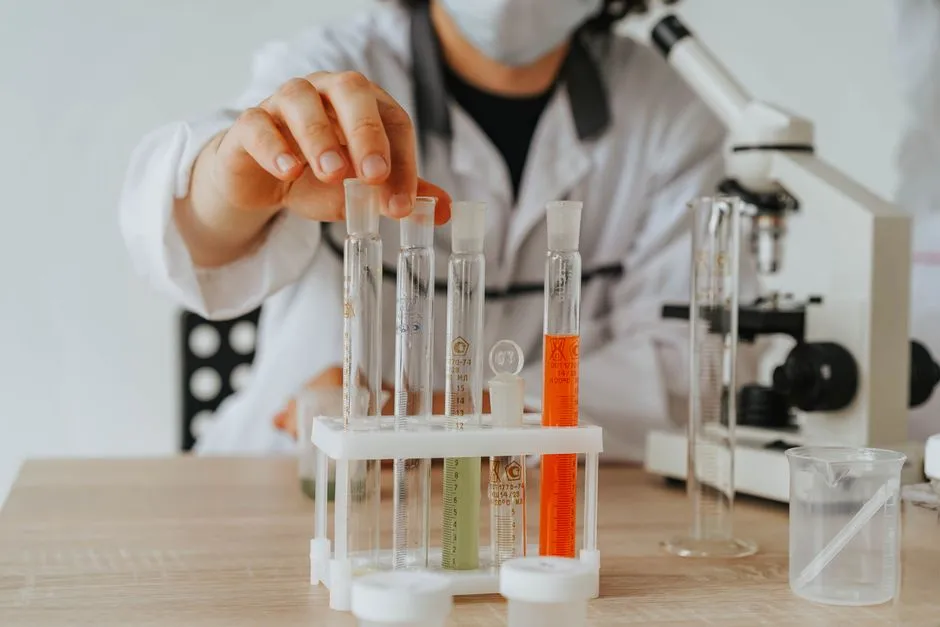
Set out a scale displaying 0.1 g, a small glass mixing vessel, a glass stirring rod, and a clean, completely dry cosmetic container suitable for oils. Follow the equipment and container manufacturer's cleaning and disinfection instructions; do not assume a rinse makes equipment ready. Have the label and batch sheet ready before opening ingredients.
The scale resolution is our practical choice for the weights above. Check that your scale's instructions cover these small quantities; a display reading to one decimal place alone does not establish measurement accuracy. Put it on the surface its instructions require and check the unit is grams.
Keep each original ingredient label or photograph it. On your sheet, leave separate spaces for supplier, ingredient name, lot number, opening date and any supplier storage or dating instructions. A product name alone will not tell you which bottle you used when you return to the record later.
How do you weigh and mix the 20 g batch?
Use this sequence as the batch record. There is no heating step.
- Put the empty mixing vessel on the scale and tare it to zero.
- Add jojoba oil slowly until the display reads 14.0 g. Record that actual weight.
- Tare again. Add squalane until the display reads 6.0 g. Record that actual weight separately.
- Stir thoroughly with the prepared rod, following the oil-mixing approach above.
- Transfer into the prepared container, close it and label it with the ingredient names, actual proportions, batch identifier and mixing date.
The second tare means the final display measures the added squalane, not the combined batch. Your sheet supplies the total: 14.0 + 6.0 = 20.0 g. Do not fill the container to its shoulder and call that 20 g; the formula specifies mass, not a fill line or volume.
If you overshoot, write down what happened before deciding what to do. For example, 14.0 g jojoba plus 7.0 g squalane totals 21.0 g. That is 66.67% jojoba and 33.33% squalane, rounded to two decimal places, rather than the stated 70:30 recipe. Labeling it 70:30 would make the record wrong. Do not pour mixed material back into a stock ingredient bottle; for this beginner version, set an incorrectly weighed batch aside and remake it rather than improvise adjustments.
Why are water and essential oils left out?
This version has no water, hydrosol, aloe product, botanical infusion, fragrance or essential oil. Adding something changes the formula; it is not a finishing touch covered by these directions.
The FDA's microbiological-safety guidance explains that contamination can enter through raw materials, manufacturing conditions, packaging and use. It advises against adding water, sharing cosmetics or using unclean containers, and recommends washing hands before application. Keep this batch dry and for your own use. No preservative is included, but water-free composition alone is not proof of microbial safety or a validated preservation system. Discard a batch if water enters; this recipe provides no salvage method.
Leaving fragrance out is also deliberate. FDA aromatherapy guidance warns that plant-derived ingredients can irritate skin or cause allergic reactions, and that some citrus oils can harm skin exposed to sunlight. This guide therefore supplies no essential-oil add-on or universal facial dilution. “Natural” is not the selection test.
How should you test it?
AAD recommends a quarter-sized test spot on the underside of the arm or at the elbow bend, twice daily for seven to 10 days. Apply the normal amount and thickness for the normal contact time. Test the finished blend before facial use.
If skin reacts, gently wash it off promptly and stop using it. AAD advises a dermatologist for severe reactions unrelieved by cool compresses or petroleum jelly. Medical patch testing investigates allergy.
FDA advises consulting a healthcare professional for suspected allergic reactions. Shortness of breath, trouble swallowing or loss of consciousness can be signs of life-threatening anaphylaxis: seek medical attention immediately. Do not test an ingredient you already know you must avoid.
How long can you keep it?
We cannot assign this untested blend an expiry date. FDA's shelf-life explanation notes that usable life depends on product type, use and storage; moisture, temperature changes, sunlight and air can affect cosmetics. Follow the ingredient suppliers' storage instructions and keep the batch away from heat, damp conditions and direct sunlight.
Ingredient dates do not validate a mixed product's shelf life. Record the mixing date without inventing an expiry. Discard material with an unexpected smell, appearance or texture; unchanged appearance is not a safety test. Small batches limit quantity, not uncertainty.
For the next decision, use our ingredient guides to investigate a particular material, including sunflower oil's carrier-oil role. Keep formulation questions separate in safe formulating. A useful first record ends with the actual formula and whether you will repeat it, not an unsupported promise about results.